Introduction
Trailer and equipment specifications rarely make headlines, yet
they decide how much a fleet earns per trip. A silo that unloads slowly, a
trailer floor unsuited to air freight pallets, or landing legs that add
unnecessary weight all chip away at payload and turnaround time in ways that
are easy to overlook until the invoices are compared at year end. This piece
looks at three components that quietly affect that bottom line.
Storage Silos
with Moving Floors
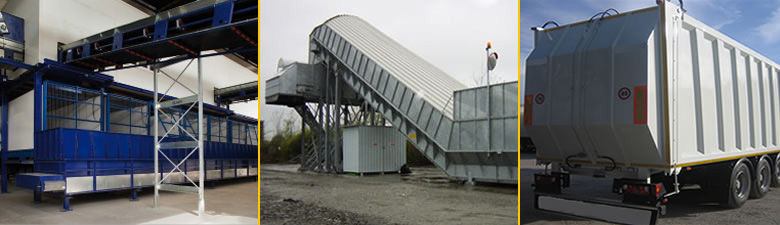
Plants that receive RDF, biomass, or coal in bulk, such as cement works,
lime plants, and waste-to-energy incinerators, generally take that material in
through semi-trailers fitted with moving floors. The trailer's floor and the
receiving silo's floor are synchronised in speed, so material transfers
directly from one moving floor to the other rather than being tipped or
shovelled. This setup, known as storage silos with moving floors, can
unload up to roughly 90 cubic metres of material in around fifteen minutes,
provided both floors are running at matched speeds. Some installations add a
Redler, a drag-chain conveyor, at the base of the silo to meter material out at
a controlled rate, which helps plants that need a steady, dosed feed rather
than a sudden bulk drop.
Air Cargo Systems
for Trailers
Air freight has its own handling logic. Unit load devices and pallets need to move on a low-friction surface so ground crews can slide them rather than lift them. A pneumatic roller bed built into a trailer floor is the basis of most air cargo systems for trailers, letting ULDs and pallets transfer between aircraft, ground equipment, and trailer with minimal manual effort. For airlines, freight handlers, and the trailer builders supplying them, this matters because turnaround time at the aircraft side is tightly scheduled, and a floor system that speeds up pallet transfer has a direct effect on how quickly a hold can be cleared or filled.
Aluminum Landing
Legs for Trailers
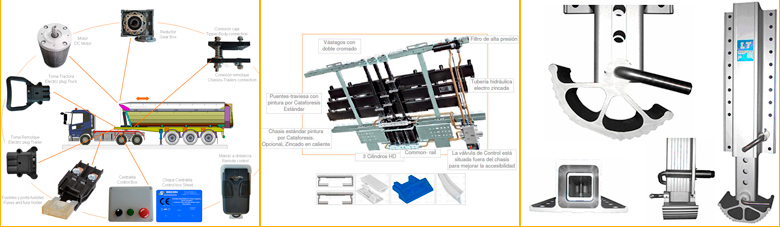
Landing legs are one of the few trailer components where the material
choice has a measurable effect on payload. Aluminum landing legs ForTrailers weigh noticeably less than the steel legs they replace, and
independent testing by APPLUS has confirmed their strength holds up under load
despite the weight saving. A typical pair rated for a static load of around 30
tonnes weighs roughly 39 to 41 kilograms, depending on the telescopic leg
length chosen. For fleet owners and procurement managers ordering at scale,
that saved weight adds up across a fleet, translating into either extra payload
per trip or a small reduction in fuel burn.
Conclusion
Each of these components solves a narrow, specific problem: bulk material
moves faster between synchronised floors, pallets clear the aircraft side
faster on a roller bed, and a lighter leg design frees up payload without
giving up load capacity. None of them is dramatic on its own, but together they
explain why equipment specification deserves the same scrutiny as route
planning or fuel contracts.


No comments:
Post a Comment